In the fields of flue gas desulfurization and industrial waste gas treatment, the oxidation regeneration process is a key technology to ensure the continuous and stable operation of the desulfurization system. Depending on the structure of the equipment, it is mainly divided into single-tower oxidation regeneration process and double-tower oxidation regeneration process. Both processes have their own characteristics in desulfurization applications and are suitable for different working conditions. WINVO will compare and analyze the advantages and disadvantages of the two processes from the perspective of desulfurization scenarios to provide reference for enterprises in selecting the appropriate technology.
Overview of the Process
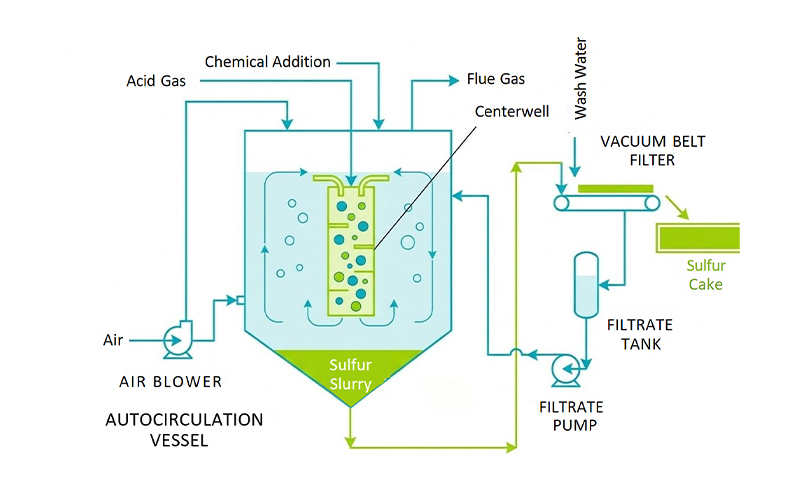
The single-tower oxidation regeneration process uses a single tower to alternately perform desulfurization adsorption and oxidation regeneration. The system is simple in structure and occupies a small footprint, but requires the desulfurization function to pause during regeneration, which is a batch operation method. In desulfurization applications, this means that flue gas cannot be processed during the regeneration period, requiring a buffer system or adjustment of production rhythm.
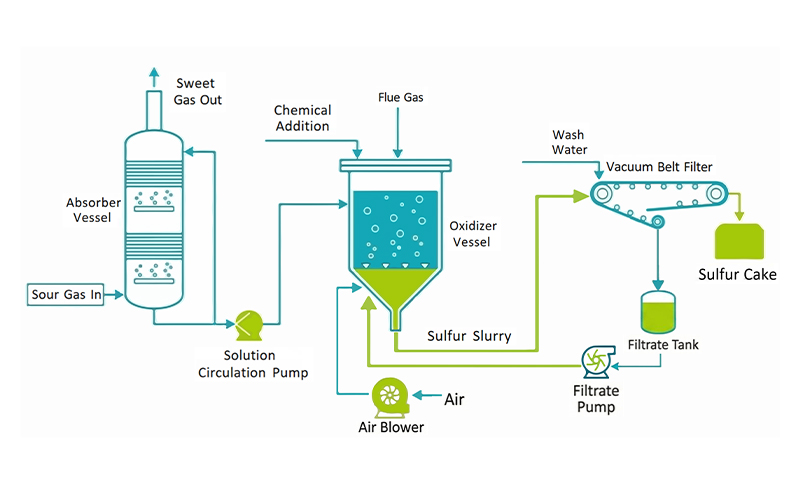
The double-tower oxidation regeneration process uses two towers operating in parallel. When one tower is performing desulfurization adsorption, the other is undergoing oxidation regeneration. The two towers alternate, achieving continuous desulfurization without interruption. For desulfurization systems that require long-term stable operation, the double-tower process can ensure uninterrupted flue gas treatment.
Advantages and Disadvantages of Single-Tower Oxidation Regeneration Process in Desulfurization
The main advantage of the single-tower oxidation regeneration process in desulfurization applications is its low investment cost. Since only one tower and its supporting system are needed, the initial investment is significantly lower than that of the double-tower process, making it suitable for projects with limited budgets. Additionally, the single-tower structure is compact and occupies a small area, which is particularly beneficial for desulfurization retrofit projects with limited space. In terms of operation, the system control logic is relatively simple, the training period for operators is short, and the daily maintenance workload is also small.
However, the disadvantages of the single-tower process in desulfurization applications are also significant. The biggest issue is the inability to operate continuously—desulfurization must be interrupted during regeneration, which is a major challenge for companies that require continuous flue gas treatment, often necessitating the setup of a flue gas bypass or buffer tank, increasing system complexity. After the desulfurization agent is saturated, it must be shut down for regeneration, making it inflexible in responding to fluctuations in flue gas flow and concentration. From the perspective of equipment utilization, the tower is idle during regeneration, with an overall utilization rate of about 50%. In addition, if the desulfurization cycle is short, frequent switching will increase valve wear and operational risks, which may affect the stability of desulfurization efficiency.
Advantages and Disadvantages of Double-Tower Oxidation Regeneration Process in Desulfurization
The core advantage of the double-tower oxidation regeneration process in desulfurization applications is its ability to operate continuously. With one tower desulfurizing and the other regenerating, the two towers alternate, achieving 24-hour uninterrupted flue gas treatment, which is particularly suitable for desulfurization scenarios requiring continuous production, such as coal-fired boilers and industrial kilns. Since there is no downtime waiting, the system is always in operation, significantly improving overall desulfurization efficiency and processing capacity. The double-tower process is highly adaptable to fluctuations in flue gas flow and sulfur dioxide concentration and can flexibly adjust the switching cycle according to actual conditions to ensure stable compliance with emissions. In terms of equipment utilization, the alternating use of the two towers effectively avoids idleness, with an overall utilization rate of over 90%. Additionally, the oxidation regeneration time is not constrained by the desulfurization cycle and can be set according to the saturation degree of the desulfurization agent to ensure more thorough regeneration and extend the service life of the desulfurization agent.
The main disadvantage of the double-tower process lies in its higher initial investment. It requires two towers as well as more complex valves, pipelines, and control systems, making the investment cost significantly higher than the single-tower scheme. The double-tower layout requires more space, posing higher site requirements for desulfurization retrofit projects. In terms of the control system, the control logic for valve switching timing, pressure balance, etc., is more complex, requiring a higher technical level for the automation system and operators. At the same time, doubling the number of equipment also means more maintenance points for valves and instruments, leading to increased maintenance workload and costs.
Selection Recommendations in Desulfurization Applications
In the selection of actual desulfurization projects, there is no absolute superiority or inferiority between the two processes. The key lies in matching the working conditions and requirements.
If the enterprise's flue gas emission is non-continuous, the processing scale is small, the investment budget is limited, or the desulfurization retrofit site is space-constrained, the single-tower process, with its simplicity and economy, is a more suitable choice. It is recommended for intermittent operation scenarios such as industrial kilns and small boilers.
If the enterprise requires continuous production, has large flue gas emissions, has high requirements for desulfurization efficiency and operational stability, or needs to meet strict environmental emission standards, the double-tower process, with its continuous and efficient core competitiveness, better meets production needs. For continuous emission scenarios such as coal-fired power plants, large industrial boilers, and steel sintering machines, the double-tower process is a more reliable choice.
Conclusion
The single-tower oxidation regeneration process and the double-tower oxidation regeneration process each have their own merits in desulfurization applications. The single-tower excels in simplicity and economy, suitable for small to medium-scale, intermittent operation desulfurization scenarios; the double-tower has continuous and efficient core advantages, suitable for large-scale, continuous emission desulfurization projects. When choosing, enterprises should comprehensively consider factors such as investment budget, site conditions, flue gas characteristics, operational continuity requirements, and environmental emission standards to select the most suitable technical route for their needs.
 English